What is
Piles?
Piles are swollen blood vessels inside and outside the anus. They are similar to varicose veins but occur around the anus.
Internal piles – inside the anus, are usually painless but may bleed.
External piles – occur under the skin around the anus and can be painful.
Hemorrhoid grading system
Symptoms
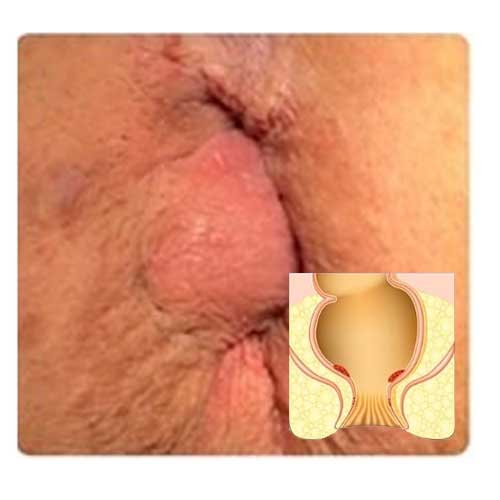
Grade 1
These are the mildest form, and they are located inside the anus rather than protruding outside. But some may lead to bleeding and itching.
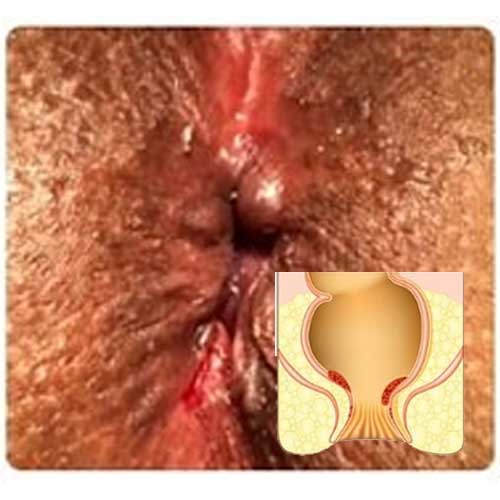
Grade 2
These hemorrhoids prolapse during defecation, but they return back into the anus on their own.
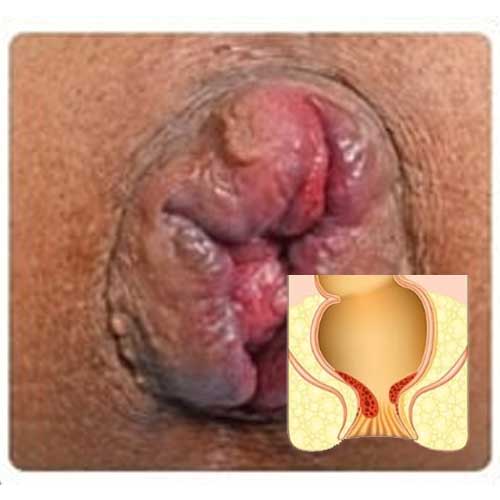
Grade 3
These hemorrhoids protrude and do not retract on their own. But you can manually back them up.
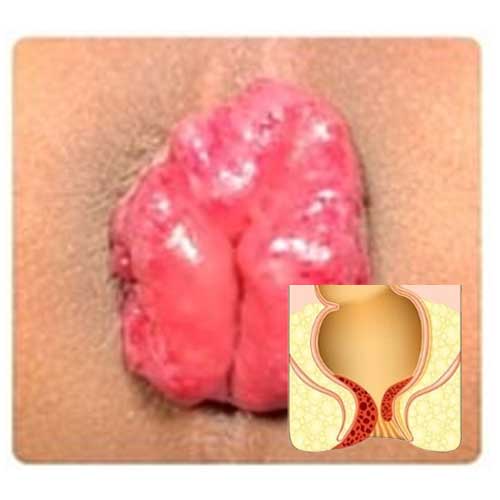
Grade 4
These protrude permanently and cannot be pushed back.
Problems that may occur if the piles is left untreated
- Bleeding can lead to anemia.
- Pain & swelling (especially if external or thrombosed)
- Prolapse (persistent protrusion, discomfort, contamination)
- Thrombosis (clot inside a vein, very painful)
- Gangrene (rarely, in grade 4).
- Infection/pus formation (rare) Ulceration of hemorrhoids
- Fistula-in-ano (rare but possible)
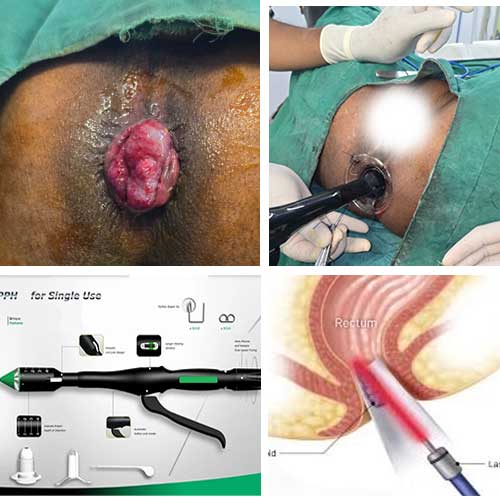
Treatment or surgical procedures recommended for different types of hemorrhoidal piles or anus
Grade 1:
- Procedures if bleeding persists: Rubber band ligation (RBL) Serotherapy Infrared Coagulation (IRC), Laser Therapy
Grade 2:
- Rubber band ligation (gold standard), serotherapy, irradiation coagulation, laser therapy. Surgery is rarely required.
Grade 3:
- Rubber band ligation (for selected cases) Doppler-guided hemorrhoidal artery ligation (DG-HAL/HAL-RAR) ປີ ປ Stapled hemorrhoidectomy, open surgery
Grade 4:
- (Irreducible prolapse / Thrombosed / Ulcerated) Stapled hemorrhoidectomy Open surgery